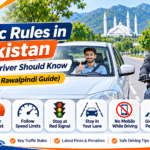

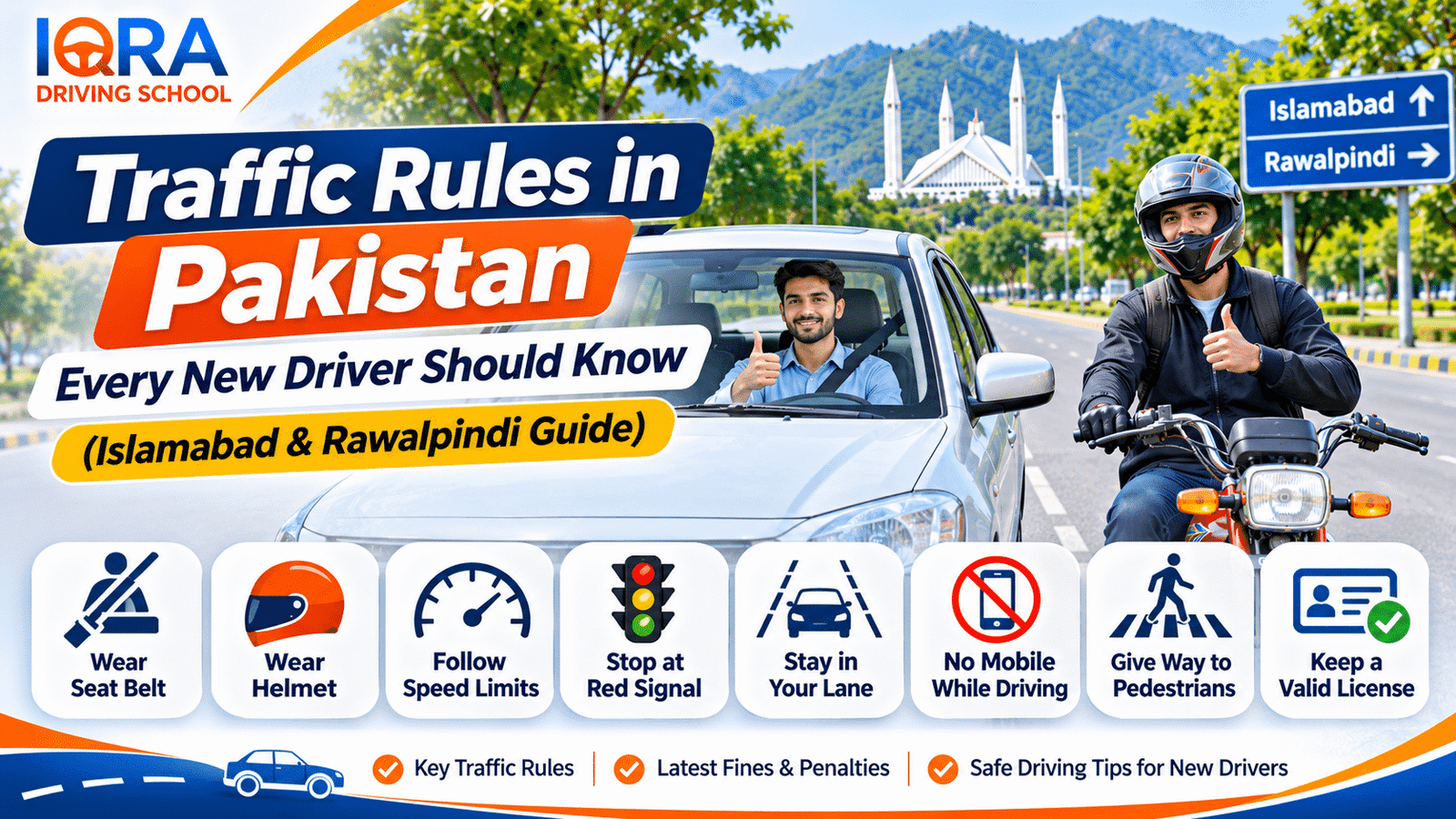
So you’ve got your license. Well done! But that’s only the start. To stay safe, and to keep those heavy fines and e-challans away from your phone, you need to know the traffic rules in Pakistan and actually follow them every time you get behind the wheel. In the last year or so, Islamabad and Punjab have both made their traffic laws a lot stricter. Fines have shot up, and for some offences you can even end up in jail.
We teach new drivers every day, so we know which rules people forget. Below, we’ve put together the traffic rules in Pakistan that every new driver and rider in Islamabad and Rawalpindi should know, in plain, simple words. Whether you drive a car, ride a bike or are still on a learner’s permit, keep this page handy.
Why Following Traffic Rules in Pakistan Matters More Than Ever
A few years back, lots of people ignored the traffic rules in Pakistan and simply got away with it. That’s not how it works anymore:
- Safe City cameras in Islamabad and Rawalpindi now catch you on their own, and the e-challan goes straight to whoever owns the car.
- Fines have gone up a lot. When Punjab’s new Motor Vehicle Ordinance came into force in late 2025, it pushed fines up from the old range of Rs. 200–5,000 to as much as Rs. 2,000–200,000 for some offences.
- Some violations can now get you jailed, or you could lose your car or bike to the impound yard.
But fines aren’t the real reason to care. Traffic rules are there to keep people alive. Follow them, and you’re looking after yourself, the people in your car and everyone else sharing the road with you.
Basic Traffic Rules in Pakistan for Every Driver
1. Drive on the Left, Overtake From the Right
Let’s start with the easiest of the traffic rules in Pakistan: we drive on the left side of the road. Keep left, and when you need to pass someone, overtake from the right, but only once you can see that the road ahead is clear and overtaking is allowed there. Never try it on a bend, a bridge or a hill, or close to a zebra crossing, because you simply can’t see what’s coming.
2. Always Carry a Valid Driving License
Driving without a valid license is against the law, and in Islamabad the traffic police have said that vehicles driven without a license, including by underage drivers, will be impounded. If you can’t remember when yours expires, you can do a quick driving license check online in a couple of minutes.
3. Wear Your Seat Belt
It takes two seconds to put on a seat belt, and in a crash it can be the thing that saves you. Under Punjab’s new rules, the driver and the front-seat passenger must wear a seat belt. Make it a family rule: nobody moves until everyone’s buckled in, even if you’re only popping to the market.
4. Follow Speed Limits
Keep to the speed limit shown on the road signs. The limit changes from road to road, so it’s worth glancing at the signs as you go, especially on the Islamabad Expressway, Srinagar Highway and Murree Road, where the traffic flows fast and it’s easy to drift over the limit without noticing.
On motorways, the limit was restored in June 2026 to:
| Vehicle | Motorway speed limit |
| Cars and light vehicles | 120 km/h |
| Public service and heavy vehicles | 110 km/h |
5. Stop at Red Signals
When the light turns red, you stop behind the stop line, not on top of the zebra crossing where people are trying to walk. Jumping a signal is one of the most common reasons drivers in Islamabad and Rawalpindi end up with an e-challan. Punjab has also raised signal violation fines to as much as Rs. 5,000 for a car.
6. Don’t Use Your Mobile Phone While Driving
We get it: the phone buzzes, and you want to check it. But a call or a quick text pulls your eyes and your attention away from the road, and a second is all it takes. Keep the phone out of reach, and only pick it up once you’ve parked.
7. Use Indicators and Stay in Your Lane
Before you turn or move into another lane, check your mirrors and switch on your indicator so the drivers around you know what you’re about to do. After that, stay in your lane. Weaving between cars might feel quicker, but it’s one of the easiest ways to cause an accident. Lane violations are one of the offences the Islamabad Traffic Police has cracked down on with higher fines.
8. Never Drive the Wrong Way on a One-Way Road
Going the wrong way down a one-way road to save a few minutes is a really dangerous shortcut. Under Punjab’s new ordinance, a one-way violation can lead to up to six months in jail or a fine of up to Rs. 50,000.
9. Give Way to Pedestrians
At a zebra crossing, people on foot have the right of way, so slow down and stop to let them cross. Take extra care near schools, hospitals and busy markets, where someone can step out in front of you without warning.
10. Make Way for Ambulances and Fire Brigades
Hear a siren behind you? Pull to the side and let the ambulance or fire truck through. It costs you a few seconds, and it could save someone’s life.
11. Give Way at Roundabouts
As you come up to a roundabout, ease off and give way to the cars that are already going round. When it’s your turn, use your indicator so the people behind you know which exit you’re taking.
12. Keep a Safe Distance
Try not to sit right on the bumper of the car in front of you. Leave enough room that you could stop safely if it suddenly braked, and leave even more when the road is wet or the fog rolls in. Our driving in fog tips and rainy day driving tips explain how.
Traffic Rules in Pakistan for Motorcyclists
If you ride a bike or a scooty, you’ve got nothing around you but air, so you need to be extra careful. These traffic rules in Pakistan apply to every rider:
- Wear a helmet, and make sure the person sitting behind you has one on too. In July 2025, the Islamabad Traffic Police made helmets compulsory for both riders and pillion passengers, regardless of gender.
- Don’t do one-wheeling. It’s dangerous, and it’s against the law. In Punjab, it can now lead to jail or a fine, with tougher penalties for repeat offences.
- Don’t overload your bike. We’ve all seen a family of four on one bike, but extra people or heavy bags make it much harder to balance and stop.
- Use your mirrors and indicators, the same as you would if you were driving a car.
- Stay visible at night, so check that your lights actually work before you set off.
Need a license for your bike? Read our guide on how to get a motorcycle license in Islamabad and Rawalpindi.
Traffic Rules in Pakistan About Your Vehicle
The traffic rules in Pakistan cover more than your driving. The car or bike itself has to be road-legal as well:
- Proper number plates. Fake, fancy or non-standard plates aren’t allowed, however nice they look.
- No illegal tinted glass. Under Punjab’s new rules, non-standard window tinting can lead to jail of up to six months.
- No smoke-emitting vehicles. If your exhaust is blowing black smoke, expect a heavy fine in Punjab and Rawalpindi.
- Registration documents. Keep the registration papers in the car with you, not at home in a drawer.
- Working lights, indicators and brakes. Check them every so often, and get them fixed if something’s off.
Underage Driving: A Big No
If a child or teenager doesn’t have a license, they shouldn’t be driving at all. Under Punjab’s new ordinance, the punishment for underage driving is doubled and parents are held legally responsible. In Islamabad, vehicles driven by underage drivers can be impounded.
There is one legal option for teenagers in Punjab: a juvenile motorcycle permit for 16 to 18-year-olds. We explain it in our motorcycle license guide, linked in the motorcyclists section above.
New Traffic Fines in Punjab and Rawalpindi
Here’s a quick look at some of the new fines reported under Punjab’s Motor Vehicle Ordinance, which came into force in late 2025:
| Violation | Reported fine or penalty |
| Signal violation | Rs. 2,000 (motorcycle) to Rs. 5,000 (car), more for larger vehicles |
| Overspeeding | Rs. 2,000 (motorcycle), Rs. 5,000 (car) |
| One-way violation | Up to Rs. 50,000 or up to 6 months in jail |
| Non-standard tinted glass | Up to 6 months in jail |
| Underage driving | Penalty doubled, parents held responsible |
Fines and traffic rules in Pakistan can change, so always follow the latest announcements from the traffic police. To find out if you have any pending fines, read our guide on traffic challan check online.
How to Remember Traffic Rules Easily
Learning the traffic rules in Pakistan doesn’t have to feel like homework. A few simple habits make it much easier:
- Learn your road signs. Our guides on the Islamabad traffic sign test and the Rawalpindi traffic sign test cover the common ones.
- Practise with a free online test on our signal test page whenever you have a few spare minutes.
- Avoid the usual mistakes listed in our guide to the most common driving mistakes.
- Learn with a trained instructor, who can spot your bad habits and fix them before they stick.
Learn Traffic Rules the Right Way With Iqra Driving School
At Iqra Driving School, we do a lot more than show you how to get a car moving. Our instructors teach the traffic rules in Pakistan, lane discipline, safe speeds, mirror use and defensive driving. By the end, you’ll be able to handle real Islamabad and Rawalpindi traffic safely and with confidence. Have a look at our driving packages and our full range of driving services.
Frequently Asked Questions About Traffic Rules in Pakistan
Which side of the road do we drive on in Pakistan?
In Pakistan, we drive on the left side of the road and overtake from the right.
Is a helmet compulsory for pillion riders in Islamabad?
Yes. Since July 2025, the Islamabad Traffic Police has required both the rider and the pillion passenger to wear a helmet, regardless of gender.
What is the speed limit on the motorway in Pakistan?
Since the limit was restored in June 2026, it’s 120 km/h for cars and light vehicles and 110 km/h for public service and heavy vehicles. Always follow the signs, because the limit can be different on some sections.
Is a seat belt compulsory in Pakistan?
Yes. Under Punjab’s new ordinance, the driver and the front-seat passenger must wear seat belts. Wearing one is one of the most basic traffic rules in Pakistan, wherever you drive.
What happens if an underage person drives in Punjab?
Under Punjab’s new rules, the punishment for underage driving is doubled, and parents are held legally responsible.
How can I check if I have a traffic fine?
You can check your e-challans online on the official ITP portal for Islamabad and the PSCA portal for Rawalpindi and Punjab. Our traffic challan guide explains how.
Final Thoughts
At the end of the day, following the traffic rules in Pakistan isn’t really about fines. It’s about getting home to your family every evening. Keep left, wear your seat belt and helmet, watch your speed, stop at red lights, stay in your lane and leave the phone alone. Small habits like these make a huge difference.
Want to build safe driving habits from day one? Apply for driving lessons at Iqra Driving School in Islamabad and Rawalpindi, and learn to drive the right way.