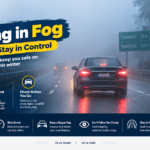

Winter in Islamabad and Rawalpindi is special. Hot chai, cold mornings, the Margalla Hills wrapped in mist. Lovely to look at. Not so lovely when you’re behind the wheel and can’t see the car in front of you. That’s the thing about driving in fog. It looks calm, but it can turn dangerous very quickly.
Inside the twin cities, fog is usually light and stays mostly in the early mornings. Head out on the M-2 towards Lahore, the GT Road or the M-1 towards Peshawar, though, and it’s a different story. Some nights, the road just disappears into white.
So in this guide, we’ll talk about how to stay safe while driving in fog. Which lights to use. How slow is slow enough. And what to do if you suddenly can’t see a thing. No complicated words, just simple tips you can actually use.
When and Where Do You Face Fog?
Fog season here usually starts around December and lasts through January, sometimes a little longer. It’s thickest late at night and early in the morning, and most days it lifts once the sun is up.
If you live in Islamabad or Rawalpindi, these are the places you’re most likely to meet it:
- Early mornings in the city, especially in low areas and near water, like around Rawal Lake
- On the Islamabad Expressway and Srinagar Highway on cold mornings
- On the M-2 motorway towards Lahore, where it can get really thick
- On the GT Road and M-1, mostly once you’re outside the city
- On long night trips to other cities in winter
Your street might look perfectly clear when you leave home. The road ahead might not be. That’s why it’s worth learning the basics of driving in fog before winter properly kicks in.
Why Driving in Fog Is So Dangerous
Here’s why driving in fog catches so many people off guard:
- You can’t see far ahead. A car, a person or a broken-down truck can pop up out of nowhere.
- Others can’t see you either. Without your lights on, you’re almost invisible.
- Distances play tricks on you. In fog, things look farther away than they actually are.
- People still drive fast. On a long straight road, it’s easy to forget how little you can really see.
Here’s the honest truth: most accidents while driving in fog aren’t caused by the fog itself. They happen because someone was going too fast for what they could see. And that part is completely in your hands.
Before You Leave: Check These First
Five minutes of checking at home can save you a lot of trouble on the road.
Check the Weather and Road Updates
Going on a long trip? Check the weather and road updates first. For the motorway, you can call the Motorway Police (NHMP) helpline at 130 or follow their official updates. In heavy fog, parts of the motorway are sometimes closed, and it’s much better to find that out at home than at the toll plaza.
Clean Your Windscreen, Mirrors and Lights
A dirty windscreen makes fog look ten times worse. Clean the glass inside and out, wipe your side mirrors, and clean all your lights. Check that the wipers work and that there’s water in the washer tank.
Check Your Lights
Switch on your low beam, high beam, fog lights (if you have them), indicators and brake lights, then walk around the car. If something’s not working, get it fixed before you go.
Leave Early
Give yourself extra time. When you’re late, you rush. And rushing is the worst thing you can do when driving in fog.
Lights for Driving in Fog: What to Use and What to Avoid
This is where most people go wrong, so let’s keep it really simple.
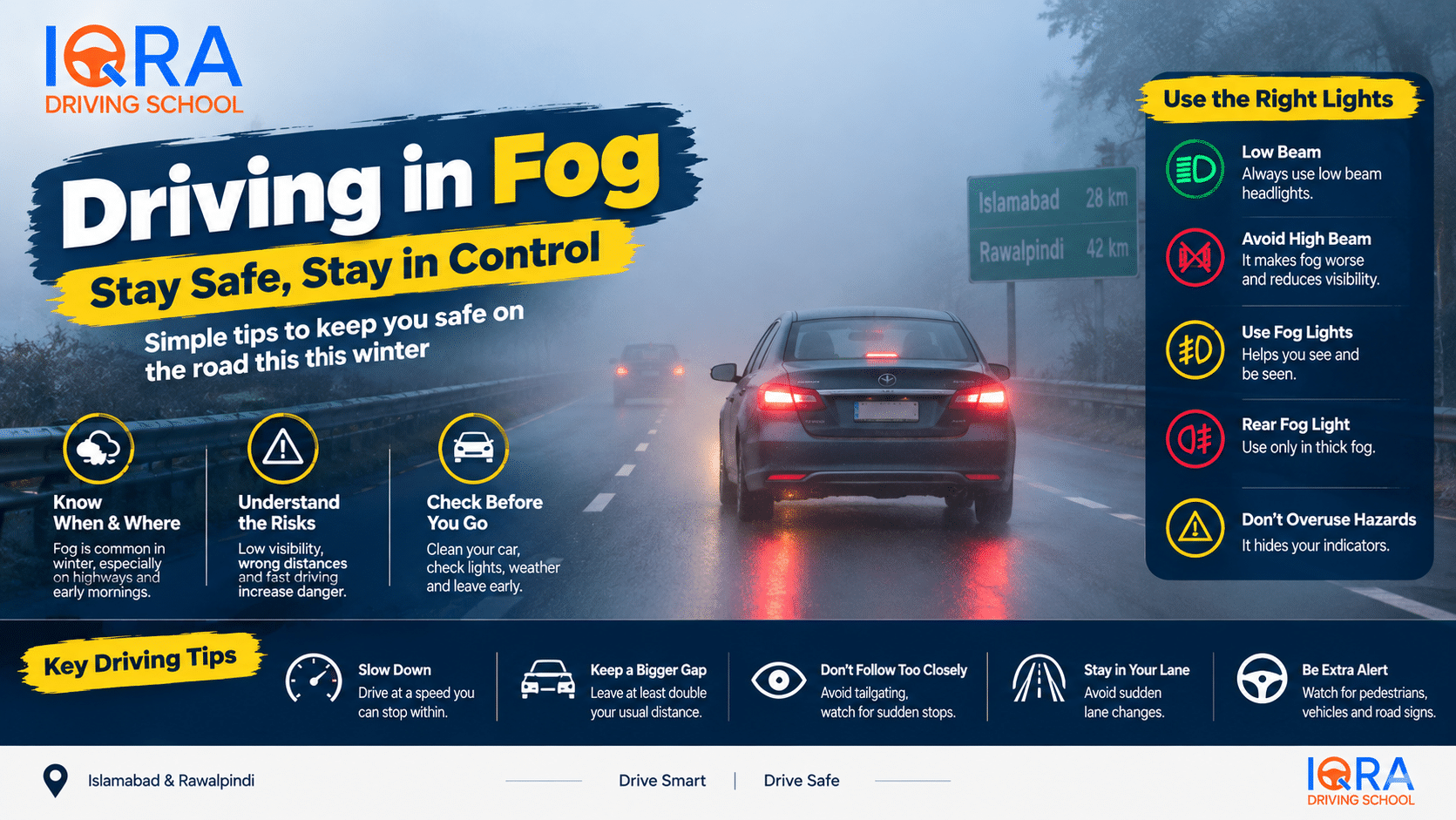
Use Low Beam Headlights
Always switch on your low beam (dipped) headlights when driving in fog. Yes, even in the daytime. They help you see the road, and more importantly, they help everyone else see you.
Don’t Use High Beam
This surprises a lot of people. High beam actually makes things worse in fog. The strong light hits the tiny water droplets in the air and bounces right back into your eyes. It’s like driving towards a white wall. You end up seeing less, not more.
Use Fog Lights Properly
If your car has front fog lights, turn them on with your low beam when the fog is thick. They sit low and light up the road just in front of you.
Got a rear fog light too? It helps cars behind you spot you. But it’s very bright, so only use it in thick fog, and switch it off once things clear up. Otherwise you’ll blind the driver behind you.
Be Careful With Hazard Lights
You’ve probably seen it: cars crawling along the motorway with hazard lights blinking. A lot of people do it. The problem is that with hazards on, nobody can tell when you’re turning or changing lanes, because your indicators get lost in the blinking. So while you’re moving, stick to your headlights and fog lights. Save the hazards for when you’ve stopped, or for a quick warning to the cars behind you when traffic suddenly slows down.
How to Drive Safely in Fog: Step-by-Step Tips
Okay, now the actual driving. These tips for driving in fog will help you stay in control.
1. Slow Down
If you remember only one rule of driving in fog, make it this one. Drive at a speed where you can stop within the distance you can see. Can only see 30 or 40 metres ahead? Then you need to be able to stop within 30 or 40 metres. Keep glancing at your speedometer, too. Fog has a way of making you feel slower than you really are.
2. Keep a Much Bigger Gap
Leave at least double your usual gap from the car in front. If they hit the brakes suddenly, you’ll be glad you did.
3. Don’t Follow the Car Ahead Too Closely
When you’re driving in fog, it’s really tempting to tuck in behind another car and just follow its tail lights. Please don’t. If that driver makes a mistake or stops suddenly, you’ll go right into them.
4. Use the Road Markings
Let the road guide you, not the car in front. The white line on the left edge of the road is your best friend in fog. Keep it in sight and stay in your lane.
5. Avoid Overtaking
Overtaking while driving in fog is a gamble, because you simply can’t see what’s coming. Unless you really have to and it’s completely safe, stay where you are and be patient.
6. Avoid Sudden Moves
Brake early and gently. Turn the steering slowly. Sudden braking or swerving can shock the drivers behind you, and they might not see you in time.
7. Keep Your Windows Clear
Cold fog outside often makes your windscreen mist up from the inside. Use the de-mister and AC to clear it. Rolling the window down a little helps too, and it lets you hear other vehicles around you.
8. Turn Off Distractions
Turn the music down and put the phone away. When driving in fog, your full attention needs to be on the road. Your ears matter too, especially at junctions.
9. Be Extra Careful at Junctions and Turns
At crossings and roundabouts, slow right down. Open your window a bit, listen for traffic, and only go when you’re sure it’s clear.
10. Watch Out for Others on the Road
Motorbikes, cyclists, people walking, tractors and even donkey carts can be almost invisible in fog. Keep an extra eye out, especially on the GT Road and the smaller roads outside the city.
Driving in Fog on the Motorway
The M-2 and M-1 are built for speed. In thick fog, that speed becomes the biggest danger. A few things to remember:
- Follow speed limits and police instructions. In fog, the Motorway Police may lower the speed limit or close sections of the road. Don’t argue with it. It’s for your safety.
- Stay in the left lane if you’re going slowly, and keep a long gap from the car ahead.
- Never stop on the main road. If you need a break, use a service area or take an exit.
- Plan your timing. If heavy fog is expected, think about leaving later in the day, when it usually clears.
What to Do If You Can’t See at All
Sometimes the fog gets so thick you can barely see your own bonnet. If that happens:
- Slow down gradually and switch on your indicator.
- Find a safe place to stop, like a service area, petrol pump or wide shoulder, well away from traffic.
- Turn on your hazard lights once you’ve stopped, so other drivers can see you.
- Don’t stop in the middle of the road or in a lane where someone could hit you.
- Wait it out. Fog usually gets lighter once the sun comes up. Reaching late is always better than not reaching at all.
Fog vs Smog: Is There a Difference?
Not every hazy winter day is just fog. In a lot of Punjab, that grey winter haze is actually smog, a mix of fog, smoke and pollution. Islamabad usually gets less of it than places like Lahore, but you can still run into it on long trips.
The rules for driving in fog and smog are pretty much the same: low beam on, speed down, big gap. On smoggy days, it also helps to keep the windows closed and switch the AC to recirculate if the smell gets bad.
Curious about how fog actually forms? Wikipedia’s page on fog explains it in simple words.
Should New Drivers Try Driving in Fog?
If you’ve only just started learning, or got your license recently, our honest advice is simple: avoid thick fog if you can. Fog asks a lot from a driver. Good car control, calm nerves and quick decisions. These come with time and experience.
If you really have to go out, try driving in fog only on short trips, go slowly and stick to roads you know well. Even better, get some winter practice with an experienced instructor sitting next to you.
Driving in rain needs a lot of the same skills. Have a look at our rainy day driving tips and our rainy day driving FAQs so you’re ready for any weather.
Common Mistakes When Driving in Fog
- Turning on high beam, which actually makes it harder to see
- Driving too fast for how far you can see
- Following too closely behind other cars
- Keeping hazard lights on all the time instead of using headlights
- Overtaking when you can’t see the road ahead
- Stopping suddenly in the middle of the road
Want to know what other mistakes new drivers make? Read our guide on the most common driving mistakes.
Learn Safe Winter Driving With Iqra Driving School
Tips are a great start. But real confidence comes from practice. At Iqra Driving School, our instructors help learners build the skills they need for all kinds of roads and weather, including defensive driving.
You can see everything we offer on our driving services page, or check our driving packages to find one that fits you. And if winter’s coming and you still haven’t learned to drive, honestly, there’s no better time to start.
Frequently Asked Questions About Driving in Fog
Which lights should I use when driving in fog?
Low beam headlights, plus front fog lights if your car has them. Skip the high beam. It bounces off the fog and makes it harder to see.
Should I use hazard lights while driving in fog?
Better not to keep them on while you’re moving, because people can’t see your indicators. Use hazards when you’ve stopped, or to warn the cars behind you about a sudden slowdown.
What speed should I drive at in fog?
There’s no fixed number. Go slow enough that you can stop within the distance you can clearly see, and always follow the speed limits set by the police.
Is the motorway closed in fog?
In very thick fog, the Motorway Police sometimes close parts of the M-2 and other motorways. Check their updates or call the NHMP helpline at 130 before you leave.
When is fog worst in Islamabad and Rawalpindi?
Usually in December and January, late at night and early in the morning. It often clears up later in the day.
Should beginners drive in fog?
It’s best to avoid thick fog when you’re new. If you have to drive, go slowly, keep the trip short and stick to roads you know.
Final Thoughts
Driving in fog doesn’t have to be scary. Low beam on. Speed down. Big gap. Follow the road markings. And if the fog gets too thick, don’t be shy about pulling over somewhere safe.
The aim isn’t to reach fast. It’s to reach safe. A few extra minutes on the road is nothing compared to a risk you can’t even see coming.
Want to feel confident behind the wheel before winter sets in? Apply for driving lessons at Iqra Driving School in Islamabad and Rawalpindi today.