
So, your first driving lesson is finally booked. Maybe you’ve been thinking about it for a year. Maybe your mother kept saying “beta, ab seekh lo” until you gave in. Whatever the reason, if your stomach feels a little funny right now, don’t worry. That’s normal.
Here’s the thing. Most of the fear isn’t about driving at all. It’s about not knowing. Will they put me straight on a busy road? What if the car turns off in the middle of traffic? What if I bump into something? Pretty much every learner walks in with these exact questions in their head.
The truth is, your first driving lesson is a lot more relaxed than people imagine. Nobody expects much from you on day one. So let’s go through what really happens, what to bring along, and a few small things you can do to feel ready.
What Happens in Your First Driving Lesson?
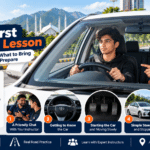
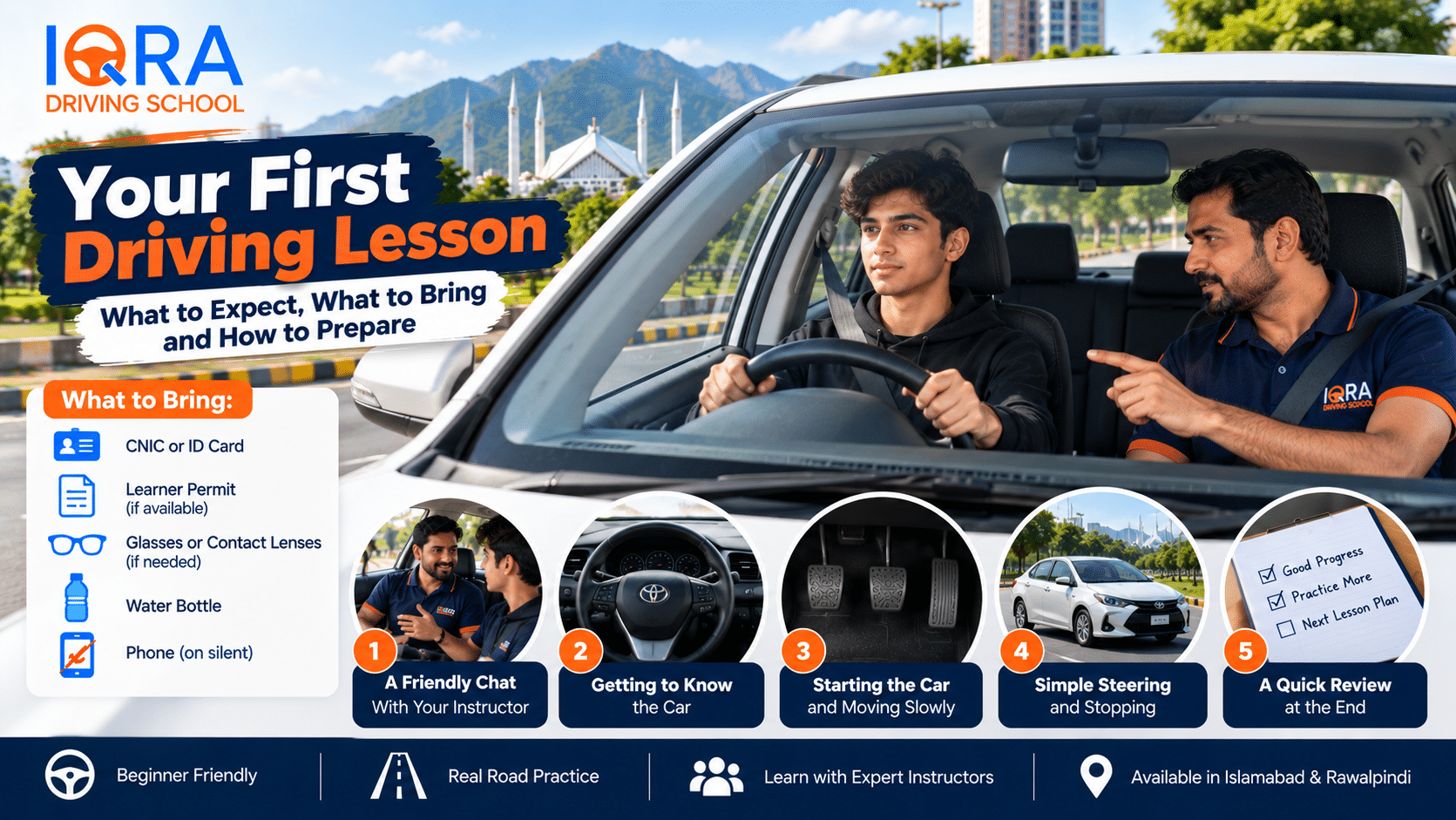
Not every instructor teaches the same way. Still, most first lessons go roughly like this. Here’s what to expect from your first driving lesson, step by step.
1. A Friendly Chat With Your Instructor
It usually starts with a bit of talking, not driving. Your instructor might ask: have you ever sat in the driver’s seat? Manual or automatic? And why do you want to learn? Maybe it’s the license. Maybe it’s the office commute. Or maybe you’re just tired of waiting for your brother to drop you everywhere.
Don’t overthink your answers. This is not a test. It just tells your instructor where to start with you.
2. Getting to Know the Car
You won’t start the engine straight away. First, you’ll just sit and get to know the car. Your instructor will point out:
- The steering wheel
- The accelerator, brake and clutch (in a manual car)
- The gear lever
- The handbrake
- The indicators
- The headlights and wipers
- The mirrors
Then comes the seat and mirrors. Sounds boring, right? But it matters more than you’d think. Sit too far back, or leave a mirror pointing at the sky, and suddenly the car feels harder to handle and you can’t see properly.
Still confused between manual and automatic? Read our guide on manual or automatic driving before your first driving lesson. It’ll help.
3. Starting the Car and Moving Slowly
Once you’re settled, you’ll learn how to start the car and get it rolling.
And no, you won’t be thrown onto Murree Road or into a busy chowk on day one. That’s not how it works. Most first lessons happen somewhere quiet, with hardly any traffic around. You’ll move forward slowly, stop gently, and get a feel for the pedals. That’s it.
Learning manual? Then expect a big part of your first driving lesson to go into the clutch. The car will probably switch off (stall) a few times. Maybe more than a few. Honestly, that’s fine. Instructors see it every single day.
4. Simple Steering and Stopping
Once moving and stopping starts to feel okay, you’ll try a little steering. A straight line. A couple of slow turns. Stopping where your instructor tells you.
The point of your first driving lesson isn’t to make you a good driver yet. It’s just to get you comfortable in that seat, and to show you how the car reacts when you turn, press the accelerator or hit the brake.
5. A Quick Review at the End
At the end, your instructor will tell you how it went. What you did well, and what you’ll work on next time. Got a question you felt shy asking earlier? Now’s the time. No question is too small.
What to Bring to Your First Driving Lesson
You don’t need a bag full of stuff. Just these:
- Your CNIC or ID card
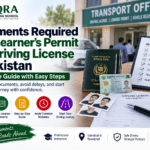
- Your learner permit, if you have one. Better to apply early. Our guide on documents required for a learner permit and driving license tells you exactly what you’ll need.
- Your glasses or contact lenses, if you need them for distance
- A bottle of water, especially in June and July
- Your phone, but on silent, and nowhere near your hands while driving
Not sure if you need a learner permit before your first driving lesson? Just ask the driving school when you book. They’ll tell you.
How to Prepare for Your First Driving Lesson
A few small things the day before can make your first driving lesson go a lot better.
Wear the Right Shoes
If you remember one tip, make it this one. Wear flat shoes with thin soles, like sneakers or joggers. Skip the heels, the heavy boots, and definitely the loose chappals or slippers. They slip off the pedals, and you can’t feel how hard you’re pressing.
Choose Comfortable Clothes
Wear something you can move in easily. You’ll be turning the wheel, looking over your shoulder and working the pedals, so tight clothes will just get in the way.
Sleep Well the Night Before
Try not to stay up late scrolling your phone. A tired mind is slow, and driving needs you to be quick and focused.
Eat Something Light
Don’t come on an empty stomach. But a heavy biryani right before the lesson isn’t a great idea either. Something light is best.
Arrive a Few Minutes Early
Reach a little early. It gives you time to breathe and settle in. Running in at the last minute only makes the nerves worse.
Learn a Few Road Signs
You don’t need to know every sign yet. Even a few common ones will make you feel more sure of yourself. If your license test is coming up soon, our traffic sign test preparation guide is a good place to begin.
How to Calm Your Nerves Before Your First Driving Lesson
Being nervous is normal. Even people who drive with total confidence today had shaky hands before their first driving lesson. A few things that really help:
You’re not alone in the car. Driving school cars usually have dual controls, so your instructor can press the brake too if needed.
Mistakes are expected. You’ll stall. You might brake too hard or take a turn too wide. Everyone does. Nobody expects perfect on day one.
Ask, ask, ask. If something doesn’t make sense, say so. A good instructor will happily explain it again in easier words.
Breathe. Feeling tense? Take a slow, deep breath. Drop your shoulders. Loosen your grip on the wheel a bit.
One thing at a time. Don’t think about the whole drive. Just focus on what your instructor is teaching you right now.
Common Mistakes Beginners Make in the First Lesson
Almost every new learner makes these, so don’t feel bad if you do too. Knowing them in advance might help you avoid a couple.
- Holding the steering wheel too tightly. Firm, but relaxed.
- Looking down at the pedals. Eyes on the road. Your feet will learn where everything is.
- Pressing the accelerator too hard. A gentle press is usually enough.
- Braking too suddenly. Slow down smoothly instead of stopping in one go.
- Forgetting the mirrors. Start the habit early. You’ll thank yourself later.
Want to know more? Read our guide on the most common driving mistakes new drivers make.
What Comes After Your First Driving Lesson?
After day one, every lesson adds a little more. Slowly, you’ll move on to things like:
- Changing gears smoothly
- Turning at junctions
- Driving in light traffic
- Using indicators and mirrors properly
- Reversing
- Parking
- Preparing for the license test, including S-shape and L-shape maneuvers
Some people pick it up fast. Others need more time. It depends on how often you practise and how relaxed you feel. Wondering how many lessons you’ll need? Our post on how long it should take to learn to drive gives you a rough idea.
And if you’re curious how learners are taught in other countries, Wikipedia’s page on driver’s education has a simple overview.
Choosing the Right Package Before You Start
Before you start, pick a package that suits you. Manual or automatic? How many lessons do you think you’ll need? Do you want to practise in your own car?
You can see all the options on Iqra Driving School’s driving packages page. Still can’t decide? Our guide on how to choose the right car package for your first lessons can help.
You can also check Iqra Driving School’s driving services page to see everything that’s on offer.
Frequently Asked Questions About the First Driving Lesson
Will I drive on a main road in my first driving lesson?
Usually not. Most first driving lessons happen somewhere quiet, so you can get used to the car without traffic pressure.
How long is a first driving lesson?
That depends on your package. Just confirm the timing with the driving school when you book.
What if I’ve never sat in the driver’s seat before?
No problem at all. Lots of learners start from zero. Your instructor will begin with the basics.
Should I learn manual or automatic for my first lesson?
Think about the car you’ll drive later. Manual car at home? Learn manual. Automatic? Go for automatic lessons.
What shoes should I wear for my first driving lesson?
Flat shoes with thin soles, like sneakers. Leave the heels, slippers and loose chappals at home.
What if I feel very nervous?
Totally normal. Just tell your instructor. They’ll go slow and help you settle in.
Final Thoughts
Your first driving lesson is a small step, but it’s the start of something big. Yes, you’ll be a bit nervous. But once you’re in that seat and taking it one step at a time, you’ll be surprised how fast it starts to feel normal.
So, Sleep well, wear good shoes. Bring your documents. And try to relax. Your instructor will be right next to you, and every lesson will make you a little more confident than the last.
Ready to begin? Apply for driving lessons at Iqra Driving School in Islamabad and Rawalpindi and take that first step today.