
More women across Rawalpindi are choosing to learn bike and scooty riding — not just for the independence it brings, but because it’s often the fastest, most affordable way to handle daily commutes, errands, and work travel without relying on someone else. If you’ve been searching for a female bike training institute in Rawalpindi, here’s what to look for, what to expect from a proper training course, and how Iqra Driving School approaches it.
Why More Women Are Learning to Ride in Rawalpindi
Traffic in areas like Saddar, 6th Road, and Satellite Town can be dense, and for many women, a bike or scooty is simply more practical than waiting on rickshaws or ride-hailing apps every day. Beyond convenience, learning to ride builds a kind of everyday confidence that carries over into other parts of life — you’re no longer dependent on someone else’s schedule to get where you need to go.
The challenge has traditionally been finding a training environment that feels comfortable and judgment-free, taught by someone who understands the specific hesitations first-time female riders often have. That’s the gap a proper female bike training institute is meant to fill.
What to Look for in Female Bike Training
Not all training setups are equal. Before choosing an institute, it’s worth checking for:
1. Female instructors Learning balance, throttle control, and braking is already a little nerve-wracking for beginners — having a female instructor who understands that hesitation, rather than rushing through it, makes a real difference in how quickly confidence builds.
2. A private, controlled practice area first Good training doesn’t start on a busy road. It starts in a closed, low-traffic space where you can practice balance, slow-speed control, and stopping without the pressure of real traffic around you.
3. Structured progression, not random practice A proper course moves you step by step — from balance and control, to basic riding, to traffic handling — rather than just putting you on a bike and hoping it clicks.
4. Flexible scheduling Morning or daytime slots matter, especially for women balancing work, home responsibilities, or study schedules.
5. Pick and drop availability Getting to and from the training location shouldn’t be a barrier to starting — this is one of the more overlooked but genuinely useful features to check for.
What You’ll Actually Learn
A well-structured bike or scooty training course typically covers:
- Balance and control — the foundation everything else builds on, usually practiced first in a quiet, open area
- Starting, stopping, and slow-speed control — the skills that feel hardest at first but become automatic quickly with proper repetition
- Gear and throttle handling (for motorcycle/bike training specifically)
- Turning and maneuvering in tighter spaces, which matters for navigating narrower streets and parking areas
- Traffic signal awareness and road positioning once you’re ready to move from the practice area to real roads, you’ll learn practical motorcycle safety principles that help you ride more confidently around everyday traffic.
- City road confidence — riding alongside actual traffic with an instructor present, building toward independent riding
Scooty vs. Bike: Which Should You Start With?
This is one of the most common questions female beginners ask, and the honest answer depends on your goal:
Scooty (automatic, no gear shifting):
Easier to pick up quickly since there’s no clutch or gear coordination involved — just twist-and-go throttle control. Most beginners feel road-confident faster on a scooty.
Bike/motorcycle (manual gears):
Takes a bit longer to master because you’re coordinating gear shifts with throttle and balance, but it gives you more flexibility long-term and works on a wider range of two-wheelers.
If your priority is getting comfortable and independent as quickly as possible, scooty is usually the faster path. If you want broader riding skills you can use on any two-wheeler down the line, bike training is worth the slightly longer learning curve.
Female Bike & Scooty Training at Iqra Driving School, Rawalpindi
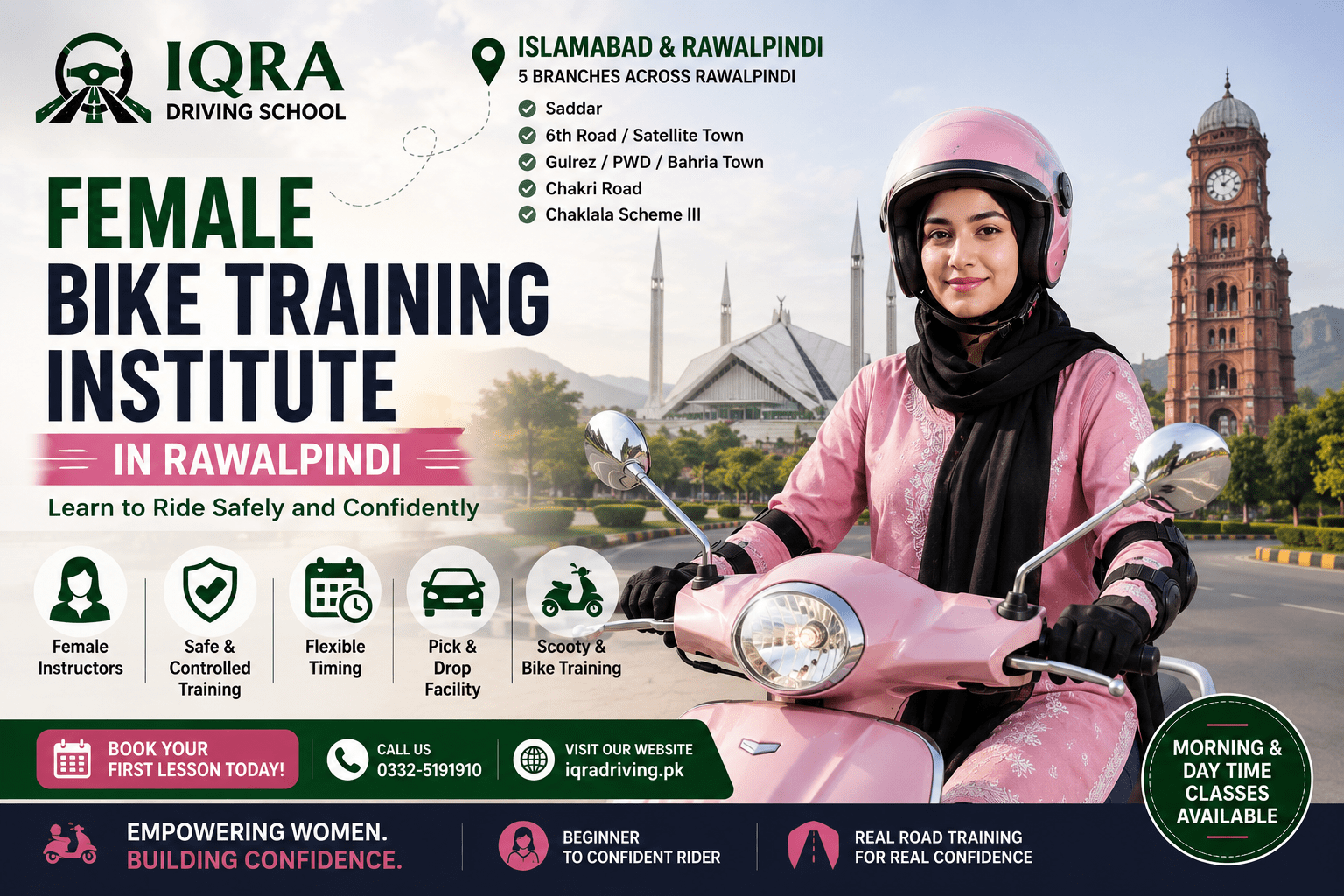
At Iqra Driving School, we offer dedicated scooty and bike/motorcycle training packages, taught with the same structured, step-by-step approach used across our Ladies Driving Program — trained female instructors, a safe and controlled starting environment, and flexible morning and daytime slots.
With 5 branches across Rawalpindi — Saddar, 6th Road/Satellite Town, Gulrez/PWD/Bahria Town, Chakri Road, and Chaklala Scheme III — you can train close to home, which also makes it easier to keep practice sessions consistent (the single biggest factor in learning any two-wheeler quickly). We also offer pick and drop within our service area, so getting to training isn’t a barrier to starting.
Frequently Asked Questions
Q: Can complete beginners with zero riding experience join?
Yes — training starts with basic balance and control in a controlled area before moving to real roads, so no prior experience is needed.
Q: How long does it take to learn bike or scooty riding?
Most beginners build solid control and confidence within 10–12 days of consistent practice, though this can vary based on how often you practice and whether you’re learning scooty or gear-based bike riding.
Q: Are the instructors specifically trained to teach women?
Yes, our female instructors are experienced in working with first-time women riders and focus on building comfort and confidence at a pace that suits you.
Q: Is pick and drop available for training sessions?
Yes, we offer pick and drop within our service area across our Rawalpindi branches.
Q: Do I need a scooty or bike of my own to join?
No — training is conducted on our vehicles, so you can start without owning one yourself.
Ready to start riding with confidence? Book your first lesson today or explore our scooty and bike training packages.