
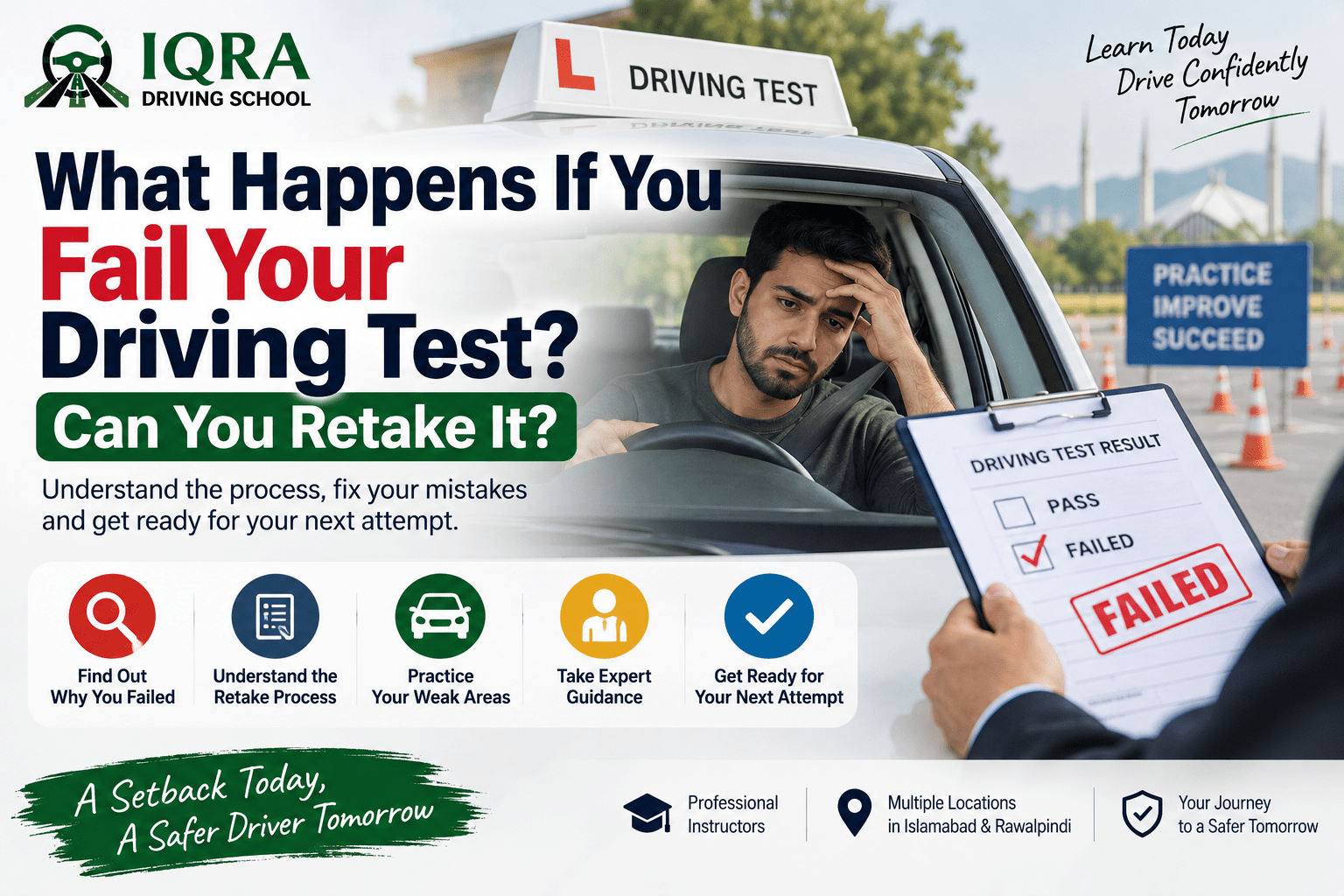
Failing your driving test is genuinely disappointing, especially after you’ve put in the practice and walked in feeling ready. But one failed attempt doesn’t mean you can’t become a licensed driver. If you’re testing in Islamabad or Rawalpindi, you can prepare again, work on your weak spots, and go through the current retest process.
The real key here is figuring out why you failed. Maybe parking gave you trouble, S-track or L-track driving tripped you up, the car stalled, or nerves just got the better of you. Once you actually pin down the problem, prepping for your next attempt gets a whole lot easier.
Can You Retake Your Driving Test After Failing?
Yes. Failing doesn’t permanently shut the door on getting your license.
After a failed attempt, follow whatever instructions the relevant licensing authority gives for your next test. For Islamabad licenses, that means checking the latest requirements directly with Islamabad Traffic Police (ITP). Retest procedures, waiting periods, and fees can all shift over time, so it’s better to confirm the current details than to go off something you read a while back.
Try to treat a failed test as feedback, not a verdict. It’s really just pointing you toward which skills need more work before you try again.
Why Do People Fail Their Driving Test?
There’s no single reason people don’t pass. Some of it comes down to technical driving skills, some of it’s just nerves getting in the way.
Poor S-Track or L-Track Control
Controlled maneuvers trip up a lot of beginners. S-track and L-track driving demand accurate steering, careful positioning, and slow, controlled movement.
Don’t try to blast through these exercises as fast as possible. Focus on smooth movements and staying in control of the vehicle the whole way through.
Parking and Reversing Problems
Parking and reversing come down to good judgment and actually using your mirrors. Beginners often turn the wheel too early, lose their position, or get nervous and rush the whole thing.
Regular practice makes these movements feel a lot more natural over time.
Clutch and Gear Problems
If you’re testing in a manual car, clutch control can turn into a real challenge. Release the clutch too fast, and the car stalls — especially once nerves are in the mix.
Practice starting, stopping, and changing gears until it all feels smooth and automatic, rather than something you have to consciously think through every time.
Forgetting Indicators or Mirrors
A driving test isn’t just about moving the car from point A to B. You also need to show you can observe properly and communicate with other road users.
Forgetting indicators, skipping mirror checks, or changing direction without looking first can all hurt your result. That’s exactly why building good road traffic safety habits during everyday practice actually matters.
Test Anxiety
You can drive perfectly fine during lessons and still fumble the moment an examiner’s sitting right next to you.
Nerves have a way of making you rush, forget simple steps, or overthink instructions that would normally be second nature. The best fix is repeated practice under conditions that genuinely feel like the real test.
What Should You Do After Failing?
Don’t just book another attempt straight away without stopping to think about what actually went wrong.
Start by listing out the mistakes you remember. Couldn’t complete a maneuver? Stalled? Forgot an indicator? Nerves messed with your focus? Write it down while it’s still fresh.
Then aim your next practice sessions squarely at those specific problems.
If reversing was the sticking point, for example, spend more time actually reversing instead of polishing skills you’ve already got down. Iqra Driving School offers license preparation training covering the practical stuff — S-shape, L-shape, parking, and reversing.
How to Prepare for Your Second Attempt
1. Practice Your Weakest Skill
Don’t spread your practice evenly if one area’s clearly the problem. Put extra time specifically into whatever maneuver caused your failure.
2. Practice on Real Roads
A driving test needs more than just nailing the controlled maneuvers. You also need to feel comfortable with actual traffic, signals, road positioning, mirrors, and everyday road situations.
Need more seat time? Driving lessons in Islamabad and Rawalpindi can help you build real, practical confidence before your next attempt.
3. Take a Mock Test
Ask your instructor to run things exactly like the real test. Follow instructions on your own and try to get through the required exercises without leaning on extra help.
A mock test often reveals problems you’d never notice during a normal lesson.
4. Work on Your Confidence
Confidence comes from actual preparation — not from rushing straight into another attempt and hoping for the best.
If you can run through your maneuvers repeatedly without your instructor stepping in to correct you, you’re in a much better spot to stay calm during the real assessment.
Should You Change From Manual to Automatic?
Not necessarily.
If clutch and gear control were the main culprits behind your failure, automatic driving might feel easier, since you get to focus more on steering, braking, and observation without that extra layer.
That said, your choice should also depend on what you’ll actually be driving once you’ve got your license. If you’re going to be behind the wheel of a manual car regularly, those manual skills are still genuinely worth having.
Iqra offers both manual and automatic driving packages, so learners can pick whichever option actually fits their situation.
What If You Fail the Test Again?
Don’t assume a second failure means you’re just not cut out to drive.
Instead, look for a pattern.
Keep failing the S-track or L-track exercises? Focus on maneuver practice specifically. Keep stalling? Put more work into clutch control. Only messing up during the actual test? Run more mock tests to get comfortable with that pressure.
Just retaking the test again and again without fixing what’s actually causing it usually doesn’t get you very far.
The real goal here isn’t just scraping through the test once — it’s becoming a genuinely safer, more confident driver.
Can a Driving School Help With Retest Preparation?
Yes. An instructor can pick up on mistakes you might never notice on your own.
A focused license-preparation session can cover:
- S-track driving
- L-track forward and reverse
- Parking
- Reversing
- Steering control
- Clutch control
- Indicators and mirrors
- Road awareness
- Mock-test practice
If you’re preparing in Islamabad or Rawalpindi, check out Iqra’s locations to find a branch that’s convenient for you.
Ready to get started? You can apply for driving training whenever you’re set to begin.
Frequently Asked Questions
Can I retake my driving test after failing?
Yes. A failed attempt doesn’t permanently stop you from getting your license. Just follow the current retest procedure of whichever licensing authority is handling your application.
How soon can I retake the test?
The waiting period depends on the current licensing procedure. For Islamabad, confirm the latest information directly with ITP before booking another attempt.
Do I have to pay again after failing?
Any retest fee should be confirmed with the relevant licensing authority, since fees and procedures can change from time to time.
How many lessons should I take before trying again?
There’s no fixed number here. Take enough practice to genuinely fix the specific problems that caused your failure, and make sure you can perform the required skills consistently — not just once or twice.
What is the best way to overcome driving-test nervousness?
Practice under conditions that actually feel like the real test. Mock tests help you get used to receiving instructions and performing maneuvers while someone’s evaluating your driving in real time.
Final Thoughts
So, what happens if you fail your driving test? You learn from it, work on your weak spots, and get ready for another go.
Don’t let one bad test wreck your confidence. Figure out what went wrong, practice with actual purpose, brush up on your road skills, and go back when you’re genuinely ready — not just eager to get it over with.
For learners in Islamabad and Rawalpindi, structured preparation can make the whole thing feel a lot more manageable. With focused practice and the right guidance, a failed first attempt can end up being just one step on the way to becoming a confident, responsible driver.